Sustainability has become firmly established in everyday consumption. Yet growing awareness does not always translate into actual purchases: high prices, a lack of trust and unclear product claims often stand in the way. Our study explores what motivates consumers to choose sustainable products, which claims they find credible and how much they are willing to pay for sustainability.


Study Profile

For this study, 300 consumers aged 18 and over across Germany were surveyed online. The sample was distributed representatively by age, gender and Nielsen region. All respondents purchase a sustainable alternative at least occasionally in at least two of the product categories examined. The survey took approximately eight minutes to complete.
Sustainability Is No Longer a Niche Concern

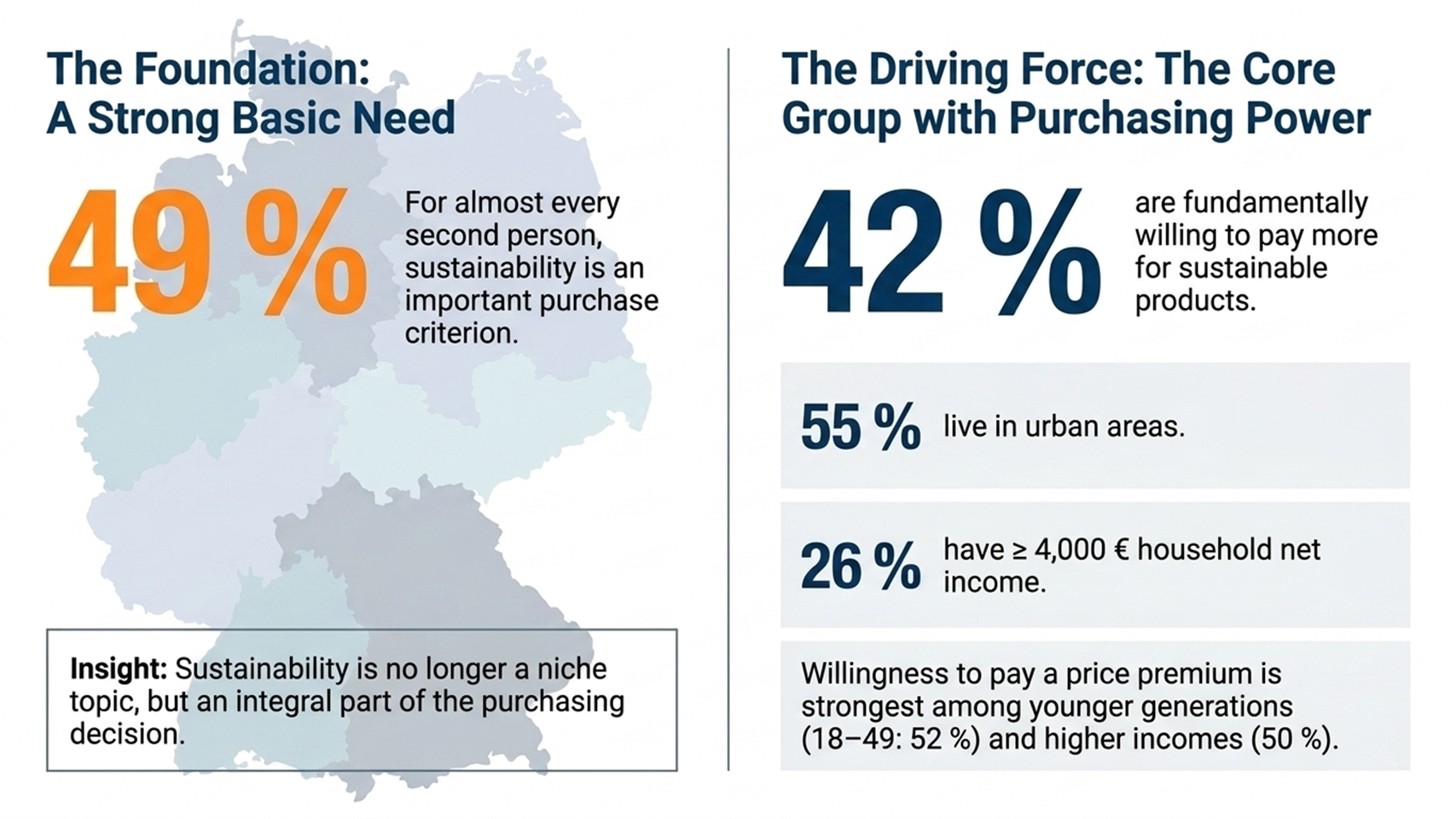
Nearly one in two respondents considers sustainability an important factor in purchasing decisions. 42% are generally willing to pay more for sustainable products. This willingness is particularly pronounced among younger consumers and higher-income households. Sustainability has therefore evolved from a niche concern into a relevant factor in many purchasing decisions—even if good intentions do not always translate into an actual purchase.

What Drives Sustainable Consumption

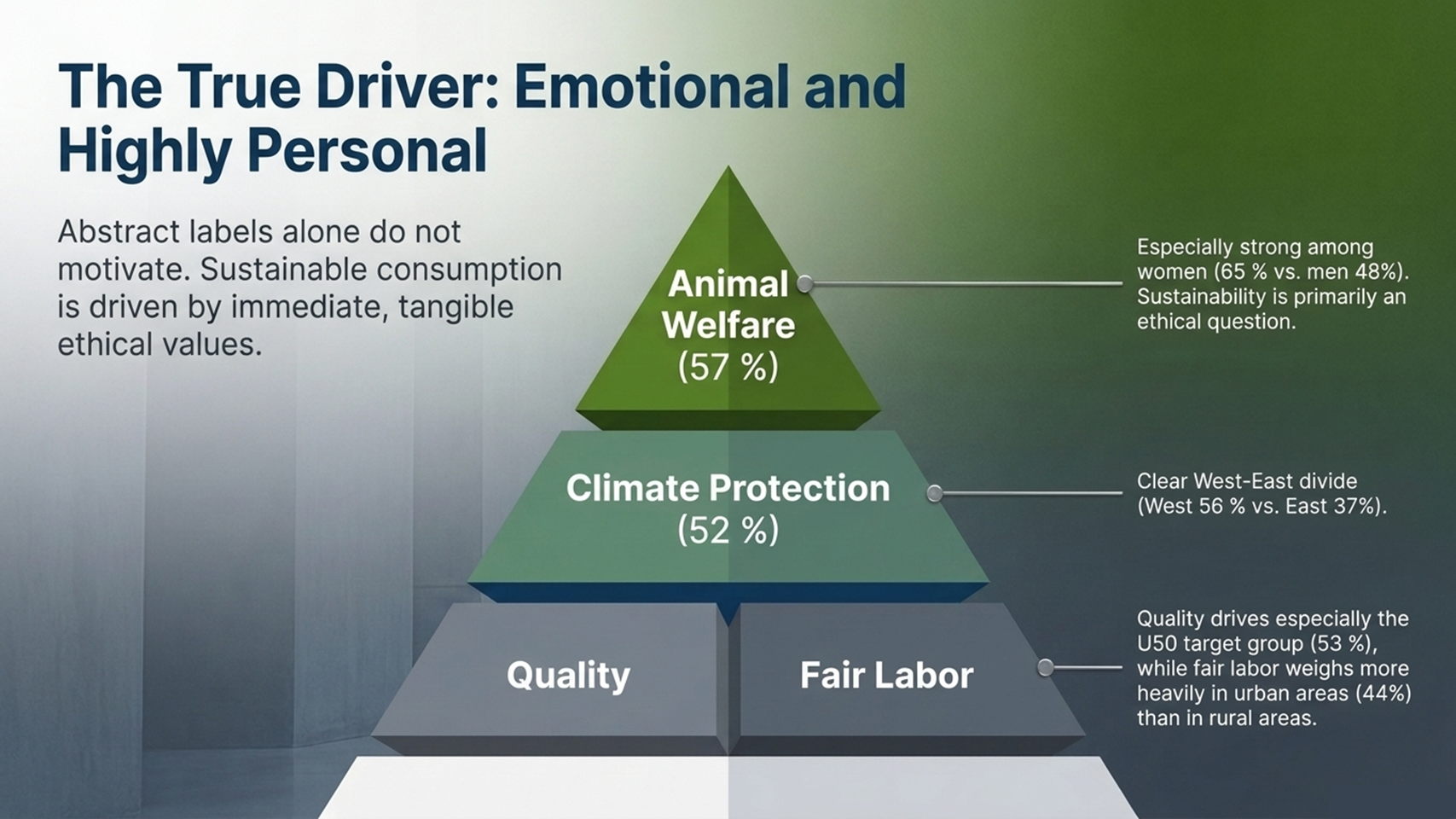
The strongest motivation for purchasing sustainable products is the desire to prevent animal suffering: 57% cite this as one of their main reasons. Environmental and climate protection follows at 52%. Sustainability is therefore viewed not only as an environmental issue, but also as a matter of personal values and ethical responsibility. Product quality and fair working conditions also play a role, but consumers are most convinced by benefits whose impact is easy to understand and emotionally tangible.

Price Is the Barrier Between Attitude and Purchase

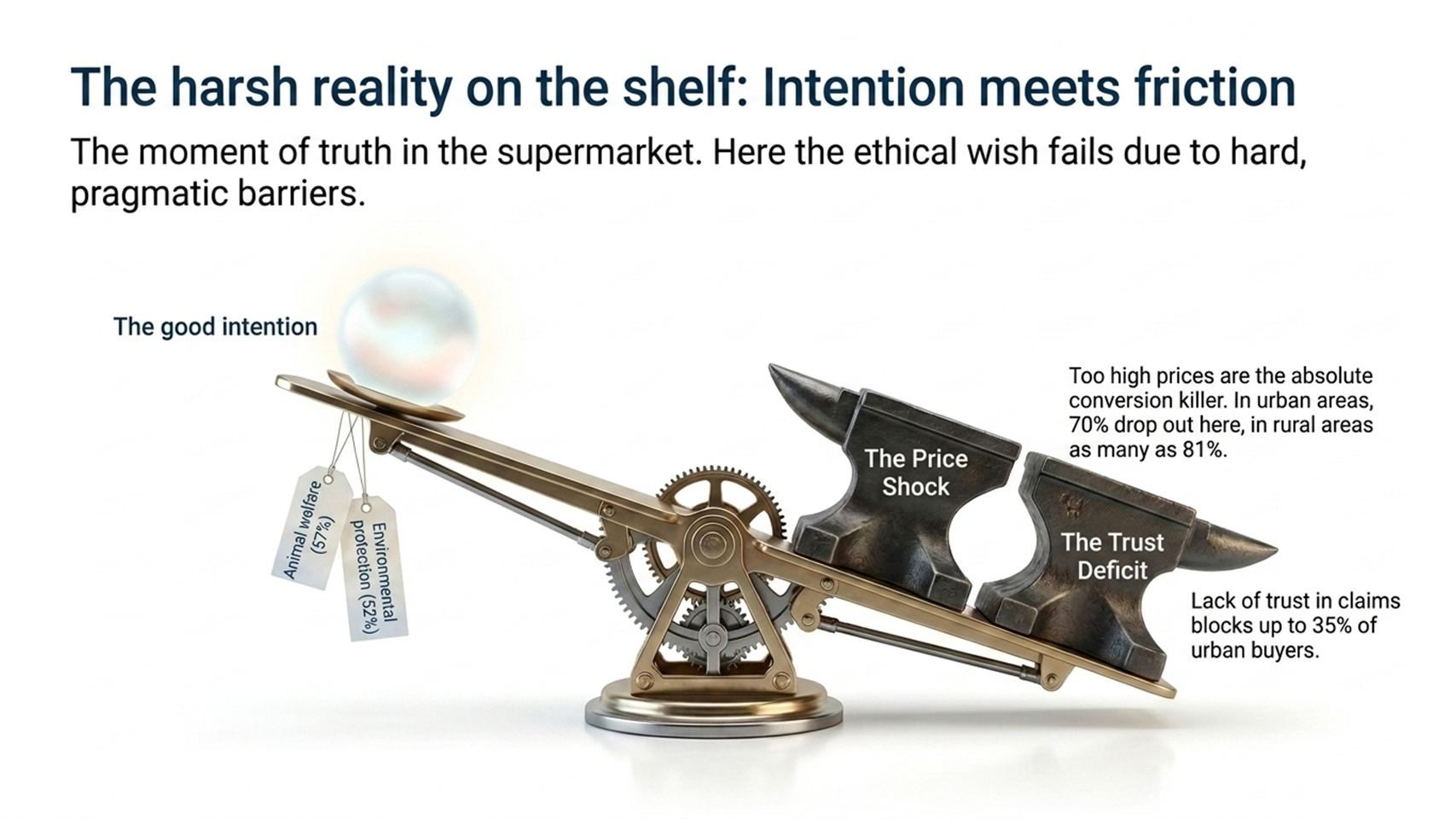
The desire to consume sustainably meets a clear limit at the shelf: 75% of respondents cite high prices as the main barrier to purchase. In rural areas, this figure rises to 81%. Other obstacles include doubts about the credibility of sustainability claims and a limited product range. Sustainable consumption therefore often fails not because of a lack of interest, but because price, trust and availability outweigh good intentions at the moment of purchase.

The Purchase Decision Is Made at the Shelf

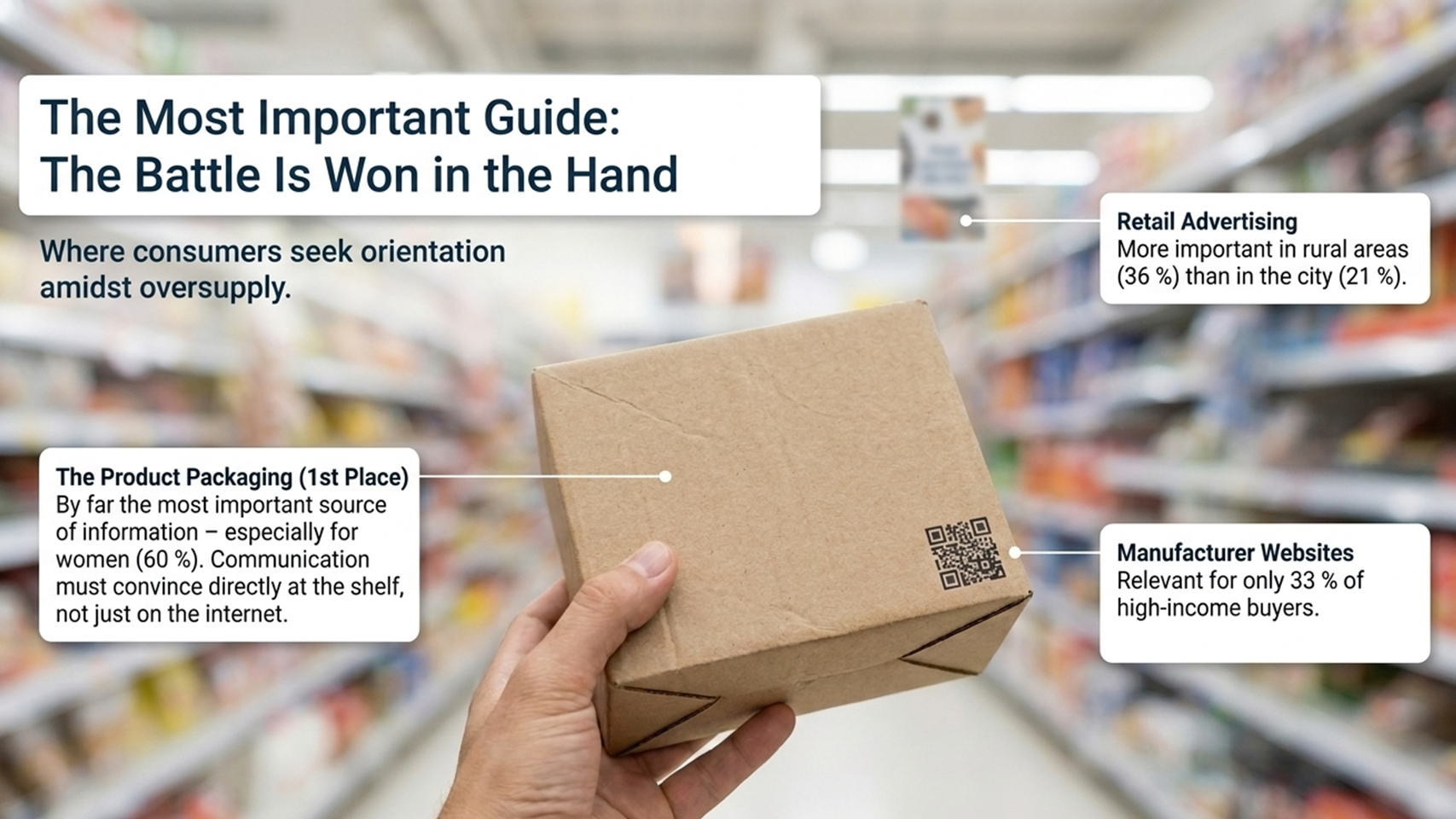
Product packaging is the most important source of information about sustainable products and is used particularly often by women. This means that sustainability communication frequently takes place exactly where the purchase decision is made. Product reviews, retail advertising and manufacturers’ websites also provide guidance, although their importance varies between target groups. For brands and retailers, this means that sustainability benefits must be communicated clearly, concretely and credibly on the packaging.

Concrete Claims Build Trust

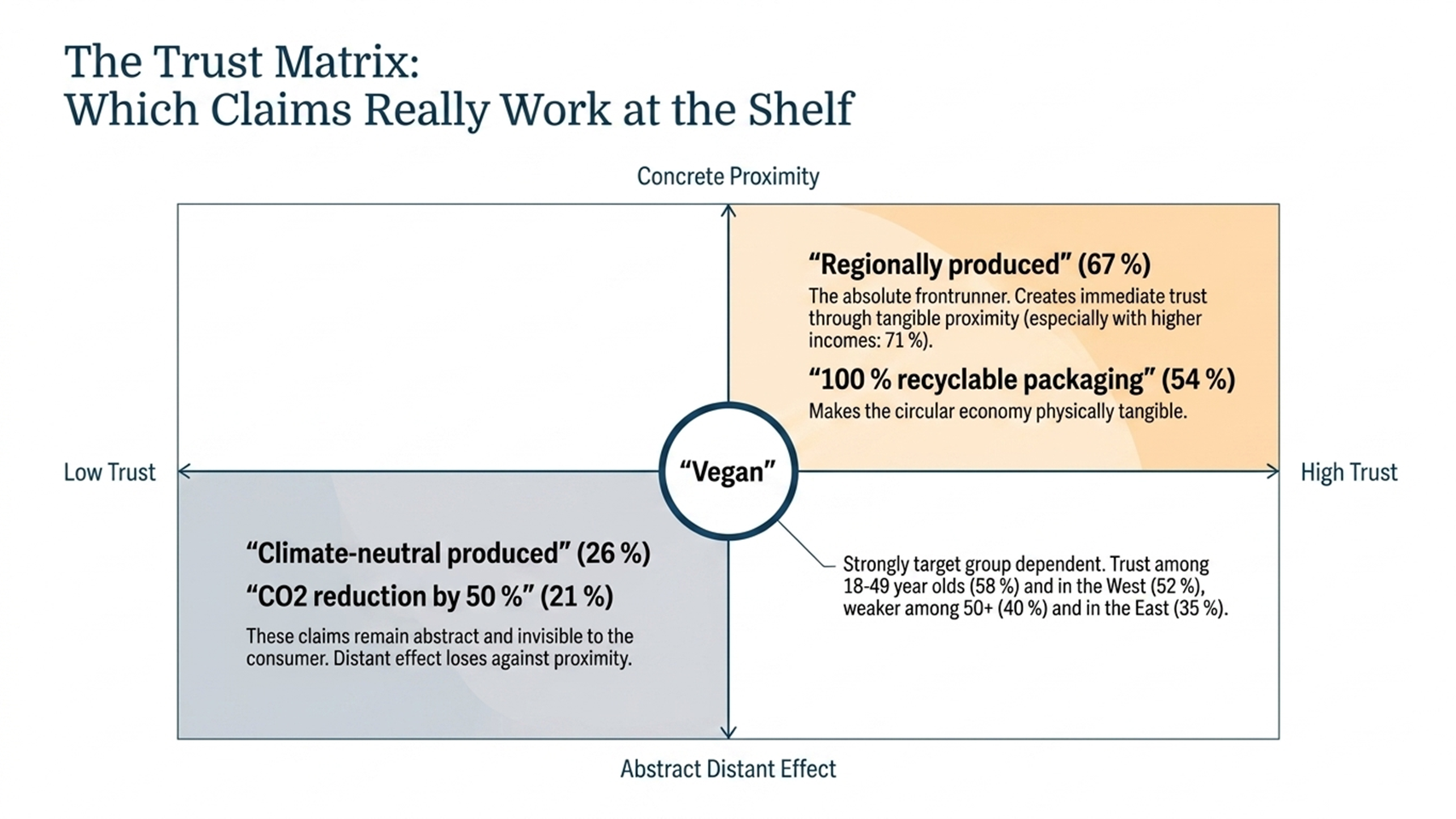
The more specific and easily verifiable a sustainability claim is, the more credible consumers perceive it to be. “Regionally produced” is the most convincing claim at 67%, followed by “100% recyclable packaging” at 54%. Consumers are considerably more sceptical of abstract claims such as “climate-neutral production” or “reduced CO₂ emissions”. Successful sustainability communication should therefore go beyond general promises and describe the specific benefit in clear and, wherever possible, verifiable terms.

Sustainability Works Through Routine

Sustainable alternatives are purchased primarily for everyday products. Foods such as eggs and milk, as well as laundry detergent and shower gel, are already part of established shopping routines. Sustainable options in these categories are generally familiar, readily available and easy to choose without much additional effort. By contrast, consumers are far less likely to make sustainable choices when purchasing durable goods such as clothing or electrical appliances. The easier sustainability fits into existing habits, the more likely it is to become part of everyday life.

Organic Eggs: A Champion of Sustainable Consumption

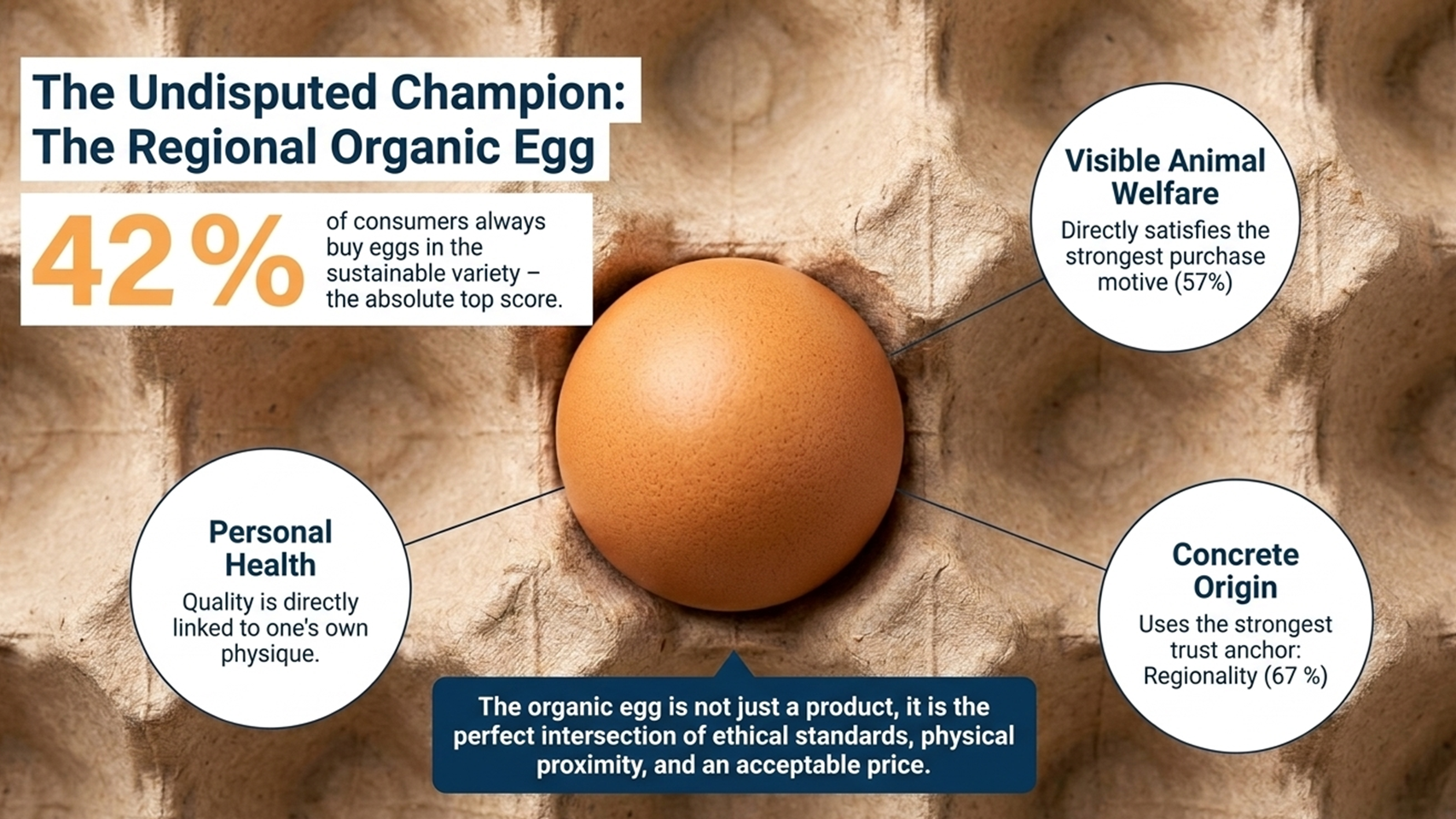
42% of respondents always choose a sustainable option when buying eggs—more than for any other product examined. Organic eggs combine several key purchasing motives in a particularly tangible way: animal welfare, regional origin and the personal desire for high-quality food. Labelling on farming methods and origin makes the difference from conventional alternatives immediately visible. This turns an abstract promise of sustainability into a simple and transparent decision at the shelf.

Sustainability Has Clear Price Limits

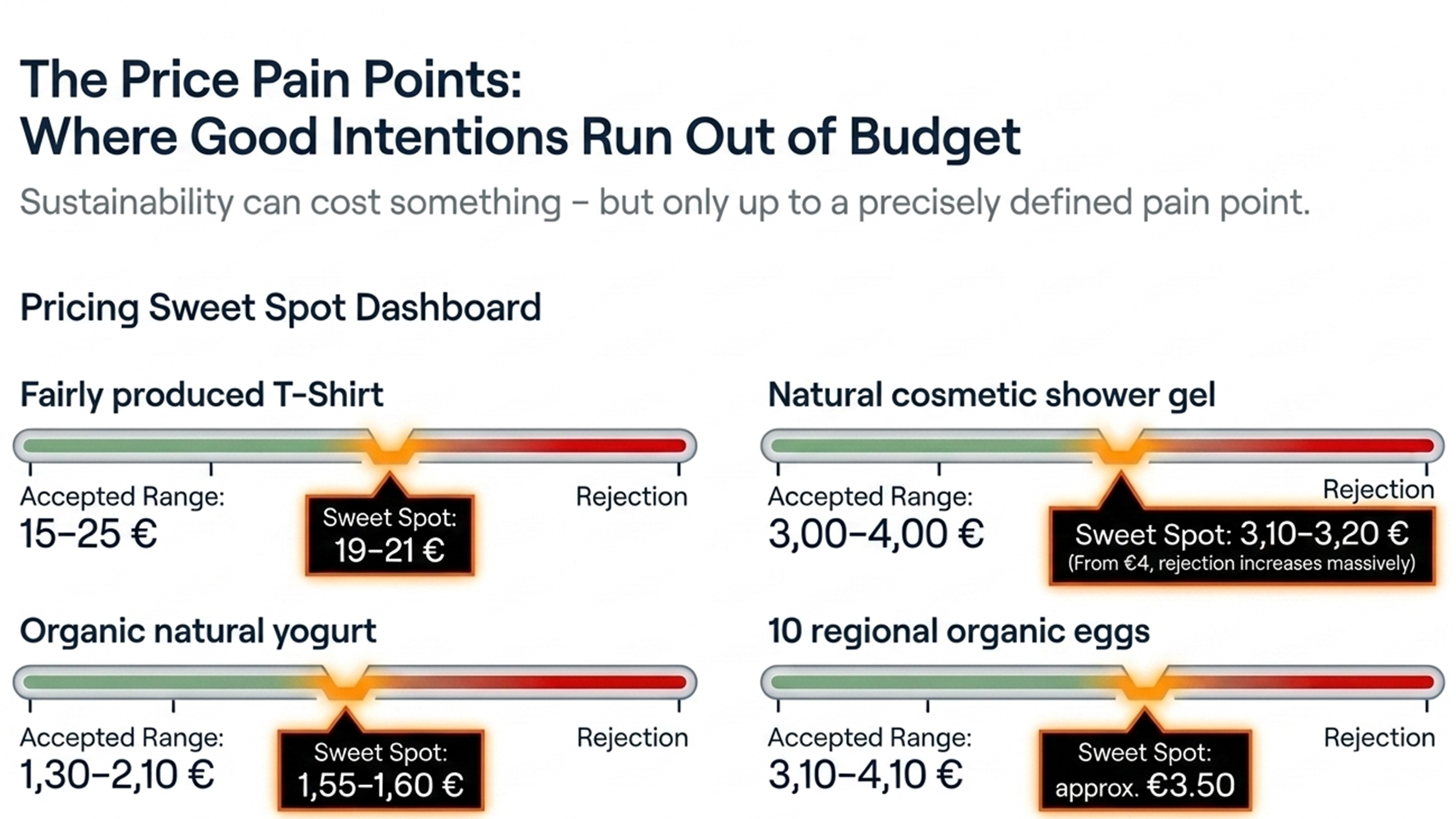
Consumers are willing to pay more for sustainable products—but only within clear limits. The psychologically attractive price range is around €19 to €21 for fairly produced T-shirts and approximately €3.10 to €3.20 for natural cosmetic shower gel. The sweet spot is around €1.55 to €1.60 for organic natural yoghurt and approximately €3.50 for ten regional organic eggs. Once these price thresholds are exceeded, purchase rejection increases significantly. Sustainable quality may therefore command a premium, but the added value must remain credible and affordable.

What Brands and Retailers Can Learn from the Findings

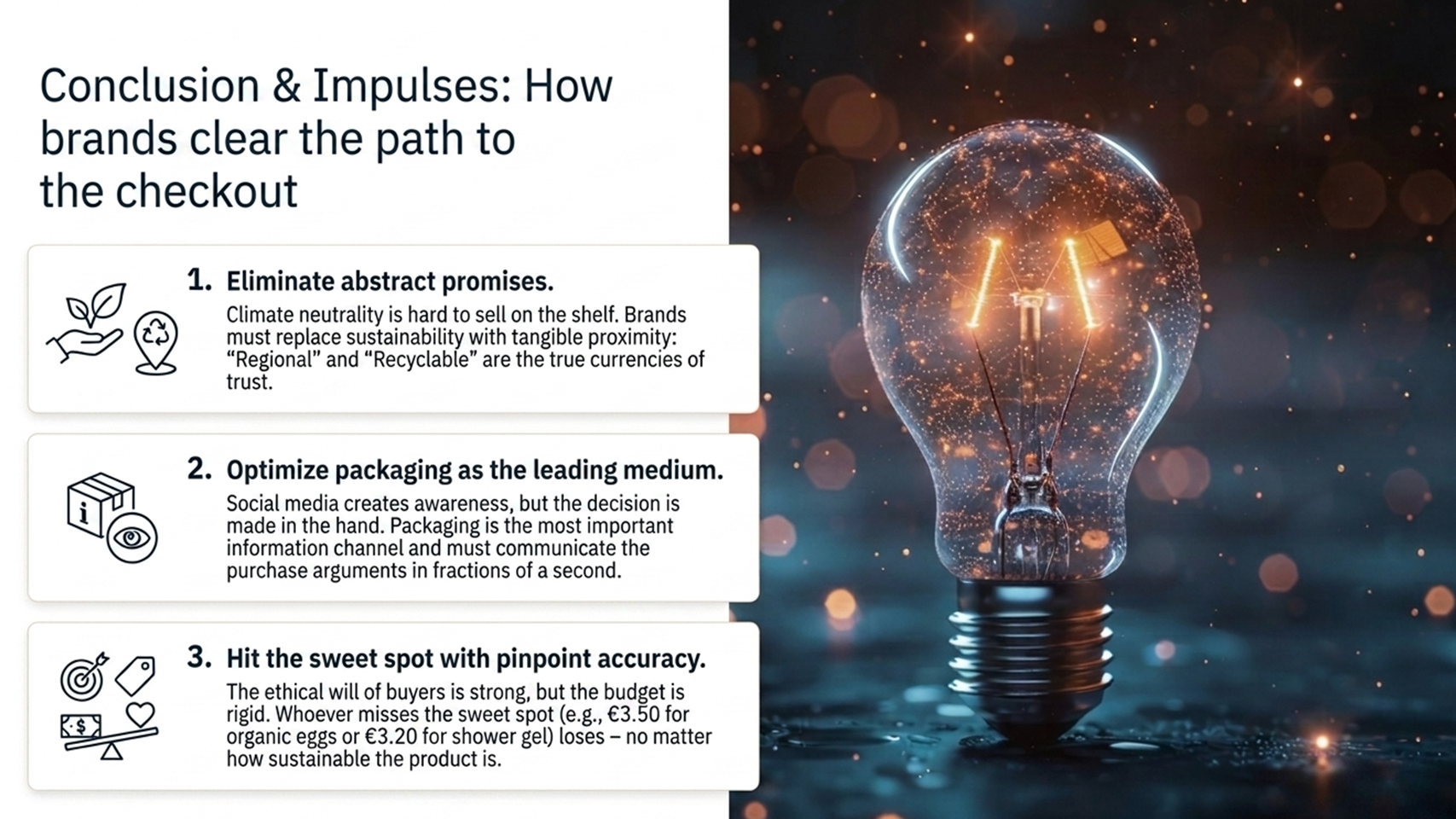
Successful sustainability communication must be specific, easy to understand and close to the point of purchase. Rather than abstract climate claims, consumers respond to tangible benefits such as regional origin, animal welfare or recyclable packaging. Packaging itself is the most important communication medium at the shelf. At the same time, the sustainability benefit must remain within an acceptable price range. Brands that combine credibility, everyday relevance and a convincing price–value proposition increase the likelihood that positive attitudes will translate into actual purchases.

Sustainability Must Convince at the Point of Purchase

The findings show that interest in sustainable products is strong, but good intentions alone do not lead to a purchase. What matters is whether consumers immediately understand the sustainability benefit, trust the claims and consider the price reasonable. Sustainability is particularly successful when its benefits are tangible and it can be integrated into everyday life without significant barriers.


Would You Like to Learn More?

We would be happy to send you the full study report and discuss which findings are particularly relevant to your brand or product category. We also provide tailored research and consultancy for pricing, packaging and shelf tests—from study design through to clear, actionable recommendations.

Your contact:

Ulrich Rieger
ulrich.rieger@mwresearch.de